
By: Ovation Obstetrics & Gynecology:
June is Scoliosis Awareness Month, and while scoliosis may seem far removed from reproductive health at first glance, the connection between spinal health and gynecologic care is more significant than many patients realize. For women living with scoliosis, whether diagnosed in childhood or adulthood, understanding how spinal curvature can affect your body during pregnancy, gynecologic exams, and pelvic health is an important part of whole-person wellness.
“I went to her for my second pregnancy and tested positive for gestational diabetes. My experience with Dr. Edwards-Key went excellent and I had a smooth labor and delivered my baby.”
Ovation OB/GYN Patient Review
A Quick Refresher: What Is Scoliosis?
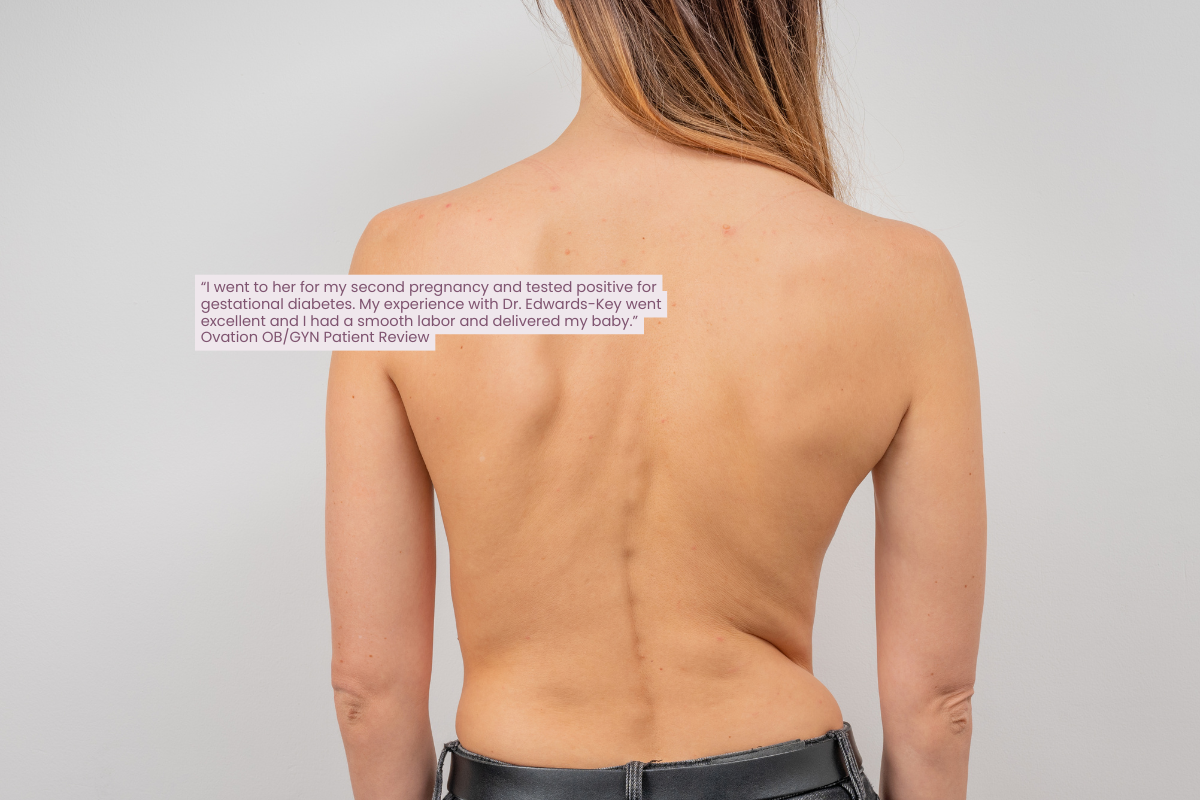
Scoliosis is an abnormal lateral curvature of the spine, often shaped like an “S” or “C” when viewed from behind. It affects an estimated 2-3% of the population and is most commonly diagnosed during adolescence, though it can develop at any age. Cases range from mild to severe, and while many people with scoliosis experience little to no symptoms, others may deal with chronic back pain, reduced mobility, and complications that affect multiple body systems, including the reproductive system.
Scoliosis and Pelvic Floor Health
The spine and pelvis are intimately connected structures. When the spine curves abnormally, it can shift the position of the pelvis, which in turn affects the alignment and function of the pelvic floor muscles. The pelvic floor supports the bladder, uterus, and rectum, and plays a role in everything from continence to sexual function to labor and delivery.
Women with scoliosis may experience pelvic floor dysfunction at higher rates than the general population. This can manifest as urinary incontinence, pelvic pain, painful intercourse (dyspareunia), or difficulty with orgasm. These symptoms are not simply “normal” side effects of scoliosis; they are treatable conditions that deserve medical attention.
What Scoliosis Means for Gynecologic Exams
For women with significant spinal curvature, positioning during a pelvic exam can be uncomfortable or even painful. The standard lithotomy position (lying on your back with feet in stirrups) may not be comfortable or feasible for everyone. If you have scoliosis and have avoided or dreaded pelvic exams for this reason, please know that accommodations can and should be made.
Let your Ovation OB/GYN provider know about your scoliosis before your exam. We can adjust positioning, use different exam techniques, or take additional time to ensure you’re as comfortable as possible. Avoiding pelvic exams isn’t a safe long-term strategy but finding a provider who will work with your body is.
Scoliosis and Pregnancy
One of the most common concerns for women with scoliosis is what pregnancy might mean for their spine and their baby. For most women with mild to moderate scoliosis, pregnancy is safe and can proceed without major complications. However, some important considerations include:
- Back pain: Many pregnant women experience back pain, but those with scoliosis may be more vulnerable. The added weight of pregnancy, combined with changes in the body’s center of gravity, can exacerbate spinal discomfort. Physical therapy, appropriate prenatal exercise, and supportive bracing can help manage this.
- Spinal curves: Some research suggests that the hormonal changes of pregnancy, which relax ligaments throughout the body, may affect spinal curvature. Most studies indicate that mild scoliosis does not worsen significantly during pregnancy, but monitoring with your care team is wise.
- Epidurals and anesthesia: Women with scoliosis sometimes worry about whether they can receive an epidural during labor. In many cases, epidurals can be administered safely, though severe curvature or prior spinal surgery may make placement more challenging. This is an important conversation to have with both your OB/GYN and your anesthesiologist before your due date.
Adolescent Scoliosis and Future Reproductive Health
Scoliosis is often first detected during the adolescent years, which is also when many young women are beginning their gynecologic care. For parents of teens with scoliosis, incorporating conversations about pelvic health, menstrual function, and long-term reproductive planning into their overall care is worthwhile. Adolescents with scoliosis who undergo spinal fusion surgery may have specific considerations related to future pregnancy and delivery that are worth discussing early.
The Whole-Body Approach to Women’s Health
At Ovation OB/GYN, we believe that great gynecologic care means looking at the whole person—not just the reproductive organs in isolation. If you have scoliosis and have questions about how it intersects with your gynecologic health, menstrual function, pregnancy, or pelvic floor wellness, we’re here to have that conversation with you.
“The team was incredibly attentive throughout my visit. They followed up promptly on my blood test, which I really appreciated, and made sure I stayed informed every step of the way. Everyone was very helpful, taking the time to answer my questions and provide clear, useful information. It made the whole experience feel supportive and reassuring. Highly recommend!
Ovation OB/GYN Patient Review
Ready to Prioritize Your Health?
At Ovation OB/GYN, we’re here to support you, wherever you are in your health journey. Our compassionate, board-certified providers offer personalized care for women at every stage of life. We welcome patients of all backgrounds and identities, and we’re committed to making every visit feel safe, respectful, and empowering.
Schedule your appointment today by calling us at 972.777.3232 or visiting ovationobgyn.com. We’re conveniently located at 5757 Warren Parkway, Suite 200, Frisco, Texas and we’re here for you.