
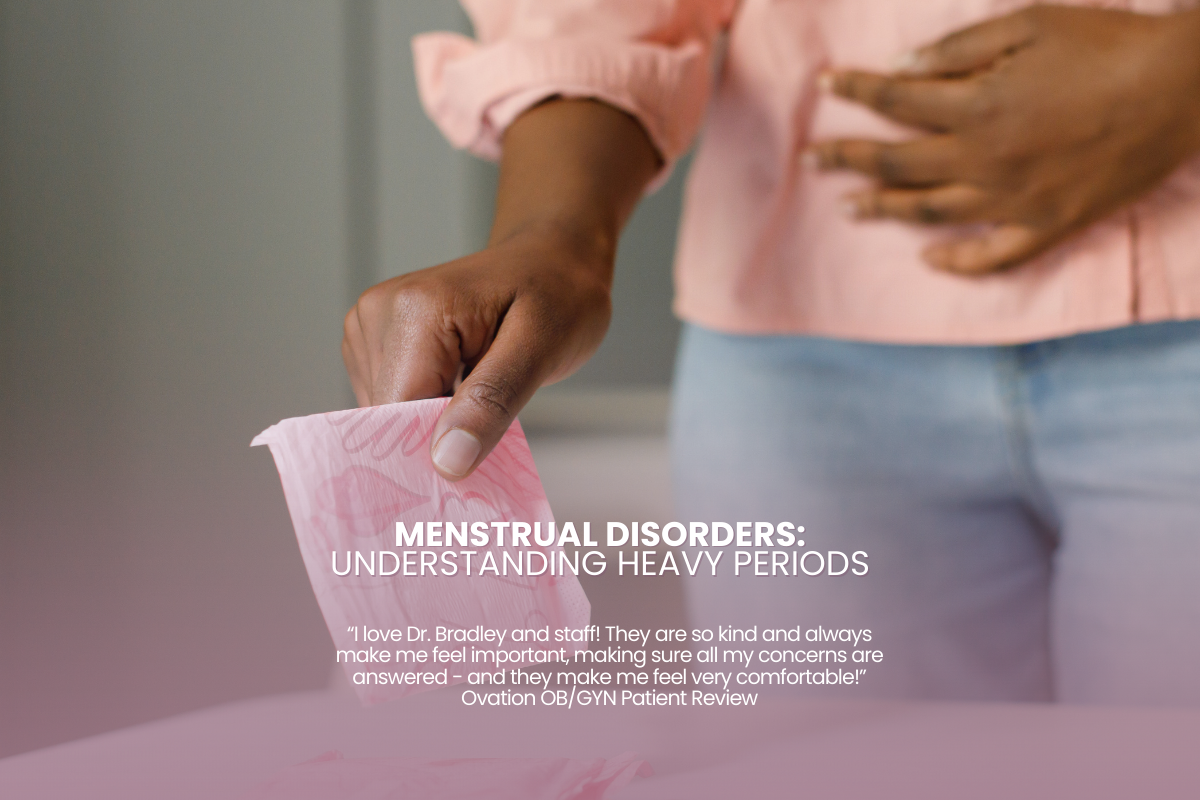
By: Ovation Obstetrics & Gynecology:
What heavy periods mean, why they happen, and when to see your OB/GYN
For many people, menstrual bleeding is a monthly routine — but for some, it can be more than just an inconvenience. Heavy menstrual bleeding can be disruptive, uncomfortable, and even a sign of an underlying health issue. At Ovation OB/GYN, we want to help you understand what qualifies as heavy bleeding, what may be causing it, and how it can be diagnosed and treated so you can feel your best every day of the month.
“I love Dr. Bradley and staff! They are so kind and always make me feel important, making sure all my concerns are answered – and they make me feel very comfortable!”
Ovation OB/GYN Patient Review
What Is Heavy Menstrual Bleeding?
Medically, heavy menstrual bleeding — previously called menorrhagia — means blood loss that is heavier or lasts longer than what’s typical for you. Periods can vary from person to person, but there are some signs that it’s time to talk with your healthcare provider:
- You soak through one or more pads or tampons every hour for several hours in a row.
- You need to double up pads or tampons to control your flow.
- You wake at night to change protection.
- Your period lasts more than 7 days.
- You pass large blood clots or your flow interferes with daily activities.
- You feel constantly tired, short of breath, or unusually fatigued. These can be symptoms of anemia due to blood loss.
Heavy bleeding isn’t something you should have to “just deal with” — it’s a health issue worth evaluation.
Common Causes of Heavy Periods
Understanding the cause of heavy menstrual bleeding can be complex because several factors may be involved. Some of the most common include:
Hormonal Imbalances
Your menstrual cycle is regulated by hormones like estrogen and progesterone. When these hormones are out of balance, the lining of the uterus (endometrium) can build up excessively and shed abnormally, leading to heavier bleeding. Conditions such as polycystic ovary syndrome (PCOS), thyroid dysfunction, or anovulation (when an egg isn’t released) can contribute to hormone imbalance.
Uterine Factors
Structural changes within the uterus are frequent contributors:
- Fibroids: These non-cancerous tumors can increase surface area and blood flow, leading to heavier bleeding.
- Polyps: Small, benign growths in the lining of the uterus can cause irregular or heavy bleeding.
- Adenomyosis: When tissue that normally lines the uterus grows into the muscular wall, bleeding and cramps may become heavier and more painful.
Bleeding Disorders
Some people have underlying blood-clotting disorders — such as von Willebrand disease — that make it harder for bleeding to stop. These can go undiagnosed for years and are important to identify because they affect overall health and care planning.
Pregnancy-Related Conditions
Unexpected heavy bleeding can sometimes be linked to pregnancy complications like miscarriage or ectopic pregnancy. It’s important to rule these out if you suspect you might be pregnant.
Medications
Certain medications — especially blood thinners, and even some contraceptives — can affect bleeding patterns. Always let your provider know about all medications you take.
Infection or Other Medical Conditions
Sexually transmitted infections (STIs), pelvic inflammatory disease (PID), or systemic illnesses like thyroid, liver, or kidney disease can also contribute to abnormal bleeding.
How Heavy Periods Are Diagnosed
If you come to Ovation OB/GYN with heavy bleeding, your provider will take a detailed history, ask about your symptoms, and likely perform some of the following evaluations:
- Pelvic exam: To assess the reproductive organs and check for abnormalities.
- Ultrasound: Imaging to visualize the uterus and ovaries.
- Hormone testing: To check for imbalances that may affect your cycle.
- Blood tests: To evaluate iron levels (for anemia) and detect bleeding disorders.
- Other diagnostic procedures: In some cases, procedures like hysteroscopy (using a camera to view inside the uterus) or sonohysterography may be recommended.
Accurate diagnosis helps pinpoint the cause and tailor the right treatment plan for you.
Treatment Options for Heavy Menstrual Bleeding
Treatment depends on what’s causing your heavy periods, your age, reproductive goals, and overall health. Some common approaches include:
Medical Therapies
- Anti-inflammatory medications (NSAIDs): Can reduce menstrual flow and ease cramps.
- Tranexamic acid: A medication taken during your period to reduce bleeding.
- Hormonal contraceptives: Pills, patches, or certain IUDs (like levonorgestrel-releasing systems) can regulate cycles and significantly reduce bleeding.
Hormonal IUDs, such as those offered at many OB/GYN practices, can be particularly effective — they thin the uterine lining and often reduce menstrual flow dramatically over several months. (See interest in Mirena’s benefits for reference).
Iron Supplementation
If heavy periods have caused or contributed to iron deficiency anemia, your provider may recommend iron supplements to restore healthy levels.
Minimally Invasive Procedures
For structural causes like polyps or fibroids, procedures such as hysteroscopic removal or endometrial ablation may be appropriate. These procedures can decrease bleeding and improve quality of life.
Surgical Options
In cases where conservative treatments aren’t effective, surgical options such as myomectomy or hysterectomy may be discussed — especially if heavy bleeding significantly impacts daily life or if reproductive goals have been met.
When to See Your OB/GYN
Heavy menstrual bleeding is not something you need to accept as normal — especially if it interferes with your daily routine, energy level, work, or activities. You should consider scheduling an appointment if you:
- Soak through pads or tampons every hour for multiple hours
- Change protection during the night
- Pass large clots frequently
- Experience fatigue, shortness of breath, or dizziness
- Notice bleeding that lasts significantly longer than usual
These are all signs that your bleeding may be more than a typical menstrual pattern and deserves medical evaluation.
“Dr. Edwards Key is amazing. This is my second pregnancy with her and it’s been an easy and reassuring process. The entire office staff is friendly and prompt to respond to questions.”
Ovation OB/GYN Patient Review
You Deserve Better Insight and Care
Heavy periods can feel isolating, but you’re not alone — and you don’t need to manage them on your own. At Ovation OB/GYN, we work with you to understand your symptoms, investigate causes, and build a treatment plan aimed at improving your quality of life. If heavy menstrual bleeding is affecting you, let’s talk — your comfort and health are worth it.