
By: Ovation Obstetrics & Gynecology:
Understanding your options for long-acting reversible contraception
When it comes to birth control, long-acting reversible contraceptives (LARCs) offer exceptional effectiveness, convenience, and peace of mind. Two of the most widely used LARC options are intrauterine devices (IUDs) and Nexplanon — a small implant placed in the upper arm. Both methods are highly effective at preventing pregnancy, yet they work differently and may fit your lifestyle and reproductive goals in distinct ways.
At Ovation OB/GYN, we guide patients through these options so you can make an informed choice that aligns with your health, preferences, and future plans. Let’s break down how IUDs and Nexplanon compare — including how they work, what to expect, potential side effects, and tips for choosing the right method for you.
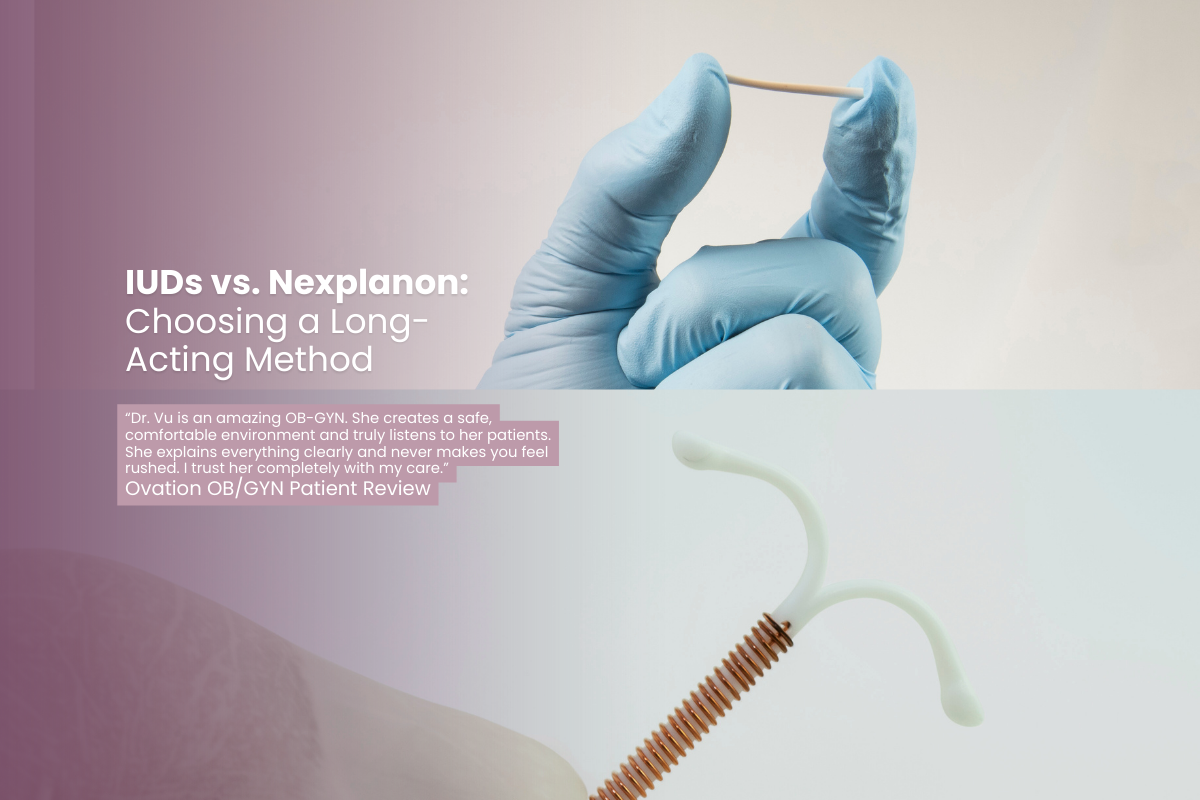
“Dr. Vu is an amazing OB-GYN. She creates a safe, comfortable environment and truly listens to her patients. She explains everything clearly and never makes you feel rushed. I trust her completely with my care.”
Ovation OB/GYN Patient Review
What Are LARCs?
Long-acting reversible contraceptives are birth control methods that provide continuous pregnancy prevention for an extended period without requiring daily attention. Unlike pills or condoms, LARCs offer “set-and-forget” reliability with some of the highest effectiveness rates available short of sterilization.
Two main LARC types are:
- IUDs (Intrauterine Devices): Small T-shaped devices placed inside the uterus.
- Nexplanon (Contraceptive Implant): A small rod inserted under the skin of the upper arm.
How IUDs Work
An IUD is a small, flexible device placed in the uterus by a trained provider. Once in place, it prevents pregnancy primarily by:
- Thickening cervical mucus to block sperm
- Altering the uterine lining to make it less receptive
- (Hormonal types) Suppressing ovulation in some users
There are two broad categories of IUDs:
- Hormonal IUDs (e.g., levonorgestrel-releasing devices)
- Provide 3–8 years of protection depending on the brand
- Often reduce menstrual bleeding and cramps over time
- Provide 3–8 years of protection depending on the brand
- Non-hormonal (Copper) IUD
- Can prevent pregnancy for up to 10 years
- Does not release hormones — ideal for those who prefer hormone-free birth control
- Can prevent pregnancy for up to 10 years
Effectiveness: Over 99% with typical use — one of the most reliable reversible methods available.
Insertion & Removal:
- A provider places the IUD during a brief in-office procedure.
- Removal is done by a clinician whenever you’re ready to conceive or switch methods.
How Nexplanon Works
Nexplanon is a small, flexible rod about the size of a matchstick that your healthcare provider places under the skin of your inner upper arm. It steadily releases a progestin hormone to prevent pregnancy.
Its main mechanisms include:
- Suppressing ovulation
- Thickening cervical mucus to block sperm
- Thinning the uterine lining
Duration:
- Effective for up to 3 years.
Effectiveness:
- Over 99% with typical use.
Insertion & Removal:
- Placed in a quick in-office procedure with local anesthesia.
- Removed by a trained clinician; fertility typically returns quickly after removal.
Comparing IUDs and Nexplanon
Here’s how these two methods stack up across key factors:
1. Duration of Protection
- IUDs: 3–10 years depending on type
- Nexplanon: Up to 3 years
If long-term, low-maintenance coverage is the priority, some IUDs offer the longest duration without replacement.
2. Hormonal vs. Non-Hormonal Options
- IUDs: Both hormonal and non-hormonal options available
- Nexplanon: Hormonal only
For patients who prefer to avoid hormones entirely (e.g., due to side effects or personal preference), the copper IUD may be a better fit.
3. Impact on Menstrual Bleeding
- Hormonal IUDs: Often reduce bleeding and cramps; some users experience very light periods or no periods at all.
- Copper IUD: May increase menstrual bleeding and cramping, especially in the first few months.
- Nexplanon: Can cause unpredictable bleeding patterns — lighter bleeding for some, irregular bleeding for others.
If lighter, less painful periods are a priority, hormonal IUDs may offer added benefits.
4. Side Effect Profiles
All birth control methods can cause side effects, and responses vary among individuals.
Common considerations include:
- IUDs: Spotting or irregular bleeding initially (especially within the first 3–6 months), cramping around the time of insertion
- Nexplanon: Irregular bleeding, occasional headaches, mood changes, or weight fluctuation for some individuals
Weighing these potential effects with your lifestyle and symptoms can help guide your choice.
5. Fertility After Removal
Both IUDs and Nexplanon allow for a quick return to fertility after removal. In most cases, ovulation resumes soon after the device or implant is taken out.
Choosing the Right Option for You
There’s no universal “best” method — only what’s best for you at this point in your life. Consider these guiding questions:
- How long do you want protection?
Do you want something that lasts up to a decade, or is 3 years ideal?
- Do you prefer hormone-free contraception?
If yes, the copper IUD may be appealing.
- How do you feel about menstrual bleeding changes?
If reducing heavy periods and cramps is a priority, hormonal options can be advantageous.
- What is your comfort level with an in-office procedure?
Both IUD insertion and Nexplanon placement involve quick procedures. We’ll walk you through what to expect so you feel comfortable and informed.
The Importance of Personalized Counseling
At Ovation OB/GYN, contraceptive counseling isn’t one-size-fits-all. We take time to understand your:
- Medical history
- Reproductive goals
- Lifestyle preferences
- Concerns about hormones or bleeding patterns
From there, we help you weigh pros and cons and choose the method that aligns with your needs.
“Since meeting Dr. Vu and seeing the quality care, expertise and excellent bedside manner she and all of her staff exhibit, it has allowed me to overcome my fear!”
Ovation OB/GYN Patient Review
Empowered Choices, Confident Care
Choosing between an IUD and Nexplanon is a personal decision — and one that should be made with accurate information and support. Both methods offer highly reliable pregnancy prevention with minimal daily attention, but the best choice for you depends on your body and your plans.
If you’re considering long-acting contraception, schedule a consultation with Ovation OB/GYN. We’ll walk through your options together, answer your questions, and help you select a method that supports your health and lifestyle.
Empowered choices start with trusted care — let’s make the plan that’s right for you.