
By: Ovation Obstetrics & Gynecology:
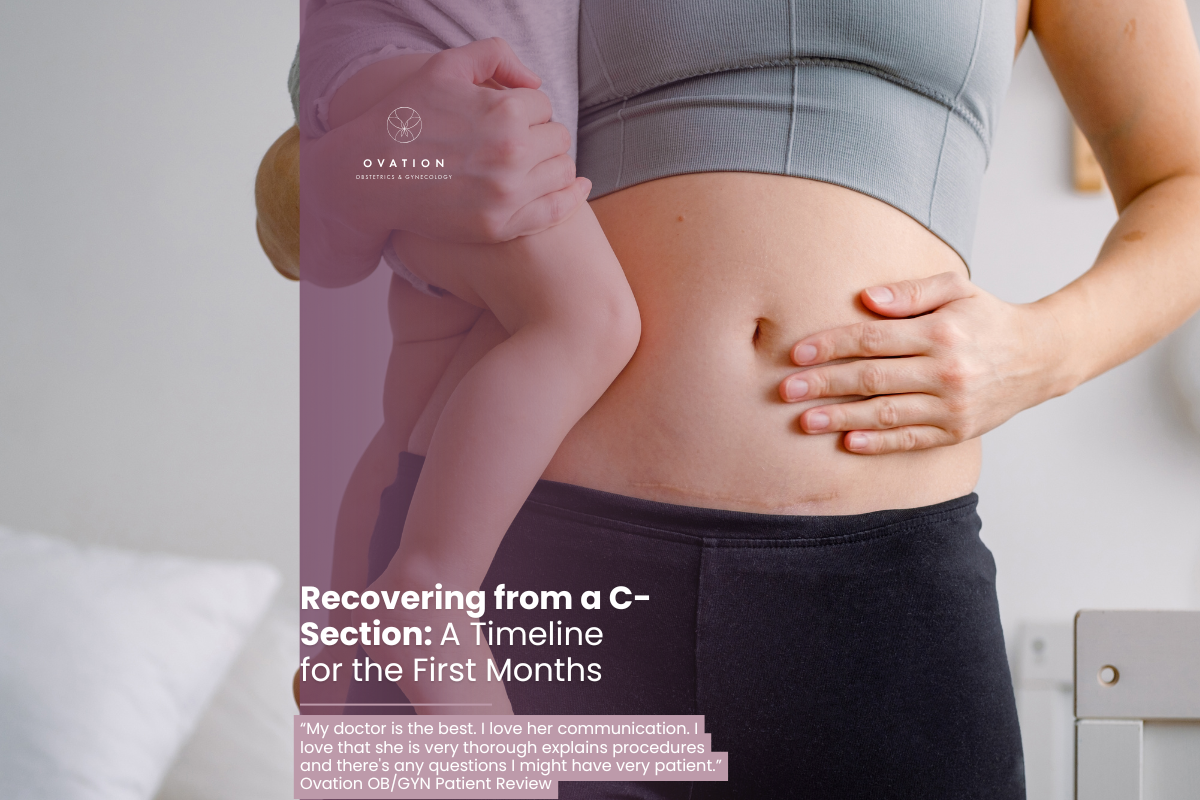
A cesarean section is major abdominal surgery: something that gets said a lot, but doesn’t always sink in until you’re actually recovering from one. You’ve just had a baby. The joy is real and enormous. But so is the healing that needs to happen, and the timeline is longer than many new moms expect.
If you’ve recently had a C-section, or you’re preparing for one, here’s an honest look at what recovery actually looks like: week by week and month by month and what your body needs to heal well.
In the Hospital: The First 2–4 Days
Most women stay in the hospital for two to four days after a C-section. During this time, you’ll have a urinary catheter for the first 12–24 hours, IV fluids, and pain management through a combination of IV medications, oral medications, and sometimes a spinal or epidural medication that provides extended pain relief.
What to expect in those first days:
- Pain and tightness at the incision site — managed with medication
- Difficulty moving from lying to sitting and getting in and out of bed — ask for help and use the bed rail
- Gas pain — common after abdominal surgery as the bowels “wake up”; walking helps
- Nurses encouraging you to walk as soon as you’re able — typically within 24 hours — which is an important part of recovery
- Lochia (postpartum bleeding) — present regardless of delivery method
Week 1–2 at Home: Rest Is the Job
Coming home with a newborn while recovering from surgery is one of the most demanding things the human body does. Your one job during the first two weeks is to rest as much as humanly possible with a newborn, avoid lifting anything heavier than your baby, and not push through pain.
- No driving while taking narcotic pain medication and your reaction time is also affected by sleep deprivation and postoperative recovery
- Keep the incision clean and dry; your care team will give you specific wound care instructions
- Watch for signs of infection at the incision: increasing redness, warmth, swelling, separation, or drainage
- Call your provider immediately for fever over 100.4°F, heavy bleeding (soaking a pad per hour), chest pain, or difficulty breathing
- Accept every offer of help — meals, baby holding, laundry — without guilt
Weeks 3–6: Gradual Return
By weeks three through six, most women start feeling significantly more mobile and functional. Pain at the incision site diminishes, though the area may still feel numb, itchy, or sensitive: this is normal as nerves heal. Internal healing, however, is still very much ongoing even when you feel better externally.
During this phase:
- Short, gentle walks are encouraged and beneficial — gradually increasing duration as tolerated
- Stairs are generally fine when managed carefully
- Avoid strenuous activity, heavy lifting (anything heavier than your baby), or core exercises
- Sexual activity, swimming, and tampon use should wait until cleared by your provider — typically at your 6-week postpartum visit
| “My doctor is the best. I love her communication. I love that she is very thorough explains procedures and there’s any questions I might have very patient.” Ovation OB/GYN Patient Testimonial |
The 6-Week Postpartum Visit: What It Covers
Your postpartum appointment at around six weeks is one of the most important visits in the recovery process. At Ovation OB/GYN, this visit covers incision healing assessment, discussion of physical activity and return to exercise, contraception and family planning options, screening for postpartum depression and anxiety, and clearance for sexual activity and return to normal function.
Don’t minimize your symptoms at this visit. If you’re struggling emotionally, in more pain than expected, or worried about your incision, say so. This is the appointment designed for exactly those conversations. Our board-certified physicians are here to support you through every part of the postpartum period.
Months 2–3: Rebuilding Strength
Once you’ve received clearance at your six-week visit, you can begin reintroducing more activity but slowly and with attention to your body’s signals. C-section recovery involves healing not just the skin incision, but the multiple layers of tissue beneath: fascia, uterine muscle, and more.
- Start with walking before any return to gym workouts or high-impact activity
- Core rehabilitation is important but must be done correctly — deep core breathing and pelvic floor work before crunches or traditional core exercises
- Consider working with a pelvic floor physical therapist — a valuable resource many postpartum women don’t know is available to them
- The external scar may be healed, but internal scar tissue can continue to develop and sometimes cause tightness or discomfort for months
What’s Still Normal Months Later
Many women are surprised by how long some C-section effects linger. The following are all within normal range well past the six-week mark:
- Numbness, tingling, or hypersensitivity at or above the scar — nerve regeneration takes months
- A visible shelf or ledge above the scar (the “C-section shelf”) — caused by scar tissue and fluid accumulation, not excess fat
- Mild pulling or tightness in the lower abdomen with certain movements
- Emotional complexity around the birth experience, especially if the C-section was unplanned
| “Office staff was very nice and accommodating. Talked with me through the whole process and were welcoming and warm.”
Ovation OB/GYN Patient Testimonial |
Questions About Your Recovery? We’re Here.
Every recovery is different, and what’s typical for one woman may not match your experience. If something doesn’t feel right, reach out: don’t wait for your next scheduled appointment if you’re concerned.
The obstetrics team at Ovation OB/GYN provides comprehensive prenatal and postpartum care for women in Frisco and throughout the surrounding North Texas area. Request an appointment: we’re here for the whole journey.