
By: Ovation Obstetrics & Gynecology:
Why strong bones matter — and how women can protect theirs throughout life
Bone health is a key part of overall wellness — yet it’s often overlooked until noticeable symptoms or injuries occur. For women, maintaining strong bones isn’t just a concern later in life: it’s something that should be nurtured from adolescence through menopause and beyond.
At Ovation OB/GYN, we help patients understand the role of bone health in lifelong well-being. Healthy bones support mobility, protect internal organs, and help prevent fractures that can affect quality of life. This guide explains why bone health matters, how it changes across life stages, and practical steps women can take to protect their bones at every age.
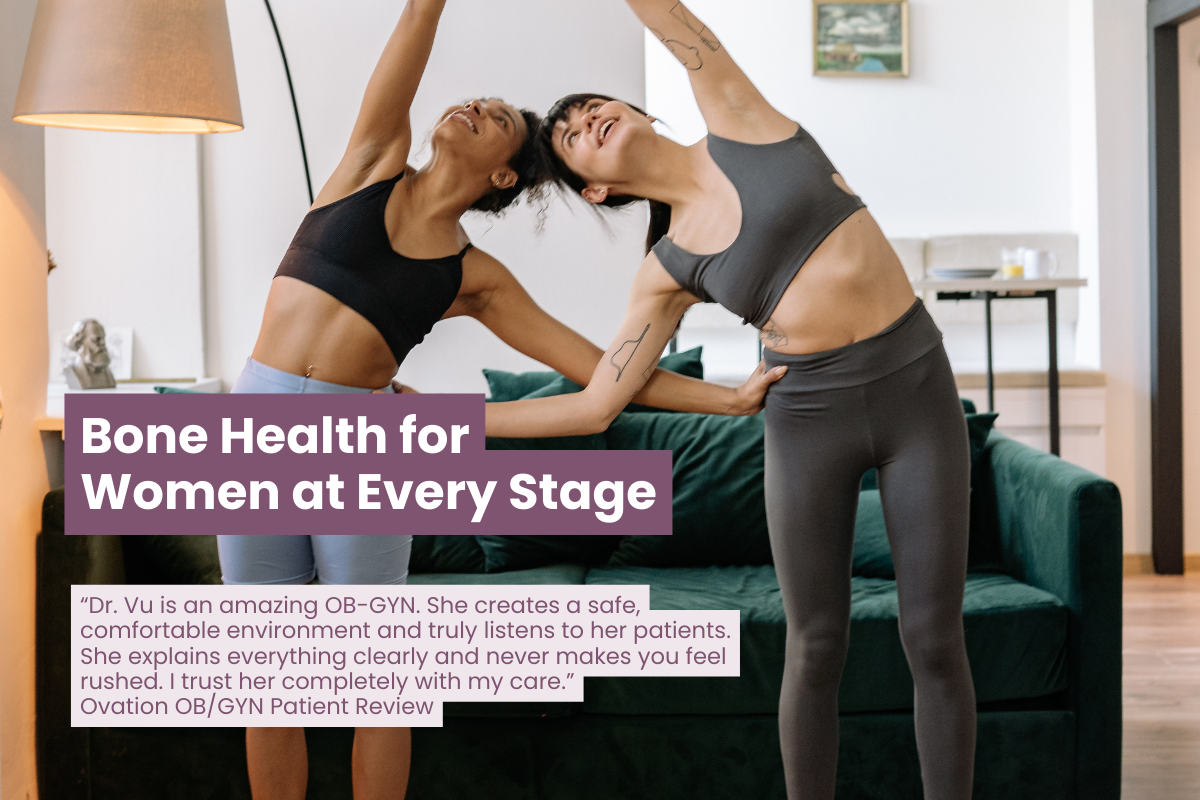
“Dr. Vu is an amazing OB-GYN. She creates a safe, comfortable environment and truly listens to her patients. She explains everything clearly and never makes you feel rushed. I trust her completely with my care.”
Ovation OB/GYN Patient Review
Why Bone Health Matters
Bones are living tissues that constantly break down and rebuild. When bone breakdown happens faster than bone formation, overall bone density decreases — making bones weaker and more prone to fractures.
Over a woman’s lifetime, bone density follows a predictable pattern:
- It increases during childhood and adolescence.
- Peaks in early adulthood (around age 30).
- Gradually declines thereafter — with more rapid loss occurring around menopause due to hormonal changes.
Because bone loss can be silent until a fracture occurs, proactive care and early prevention are essential.
Bone Health in Adolescence & Young Adulthood
Strong bones start early. The teenage years and early 20s are critical because up to 90% of peak bone mass is built by age 18 in girls and age 20 in boys. The more bone density you build during youth, the higher your “bone bank” for later years.
Key factors for building strong bones early:
1. Nutrition
Calcium is a building block of bone. Good dietary sources include:
- Dairy products (milk, yogurt, cheese)
- Leafy green vegetables (kale, broccoli)
- Fortified foods (cereals, plant-based milks)
Vitamin D — obtained through sunlight and fortified foods — helps the body absorb calcium effectively.
2. Physical Activity
Weight-bearing exercises (such as walking, running, dancing, or jumping) are especially beneficial. Strength training and resistance exercises also stimulate bone growth and improve muscle strength.
3. Healthy Habits
Avoiding smoking and excessive alcohol use supports bone formation. These substances can interfere with bone growth and increase risk of future bone loss.
At Ovation OB/GYN, we encourage young women to view bone health as a foundation for lifelong strength — not just something to worry about later.
Bone Health in Women’s 30s & 40s
After peak bone mass is reached, women enter a maintenance phase where the focus shifts to preserving strength. Lifestyle choices continue to play a major role, and early screening may be appropriate depending on risk factors.
Factors That Affect Bone Health in Midlife
- Dietary intake: Consistent calcium and Vitamin D remain important.
- Hormonal changes: Perimenopause can begin in the late 30s or early 40s, and estrogen levels start to fluctuate. Estrogen supports bone preservation, so changes in hormonal balance may subtly influence bone density.
- Lifestyle: Weight management, regular physical activity, and healthy habits still impact bone strength.
For women with risk factors — such as a family history of osteoporosis, early menopause, or a history of eating disorders — talking with a provider about bone health earlier can help personalize care.
Bone Health Around Menopause and Beyond
The transition into menopause — typically in a woman’s late 40s to early 50s — marks a major shift for bone health. As estrogen levels decline, bone breakdown begins to outpace bone formation more rapidly. This accelerates bone loss and increases the risk of osteoporosis — a condition that weakens bones and raises fracture risk.
Why This Matters
Osteoporotic fractures — particularly of the hip, spine, and wrist — can affect independence and quality of life. Vertebral fractures, for example, can lead to chronic pain or height loss.
Screening Recommendations
For most women, a bone density scan (DEXA scan) is recommended by age 65. However, earlier screening may be appropriate if you have:
- A family history of osteoporosis or fracture
- A personal history of fractures as an adult
- Certain medical conditions (e.g., rheumatoid arthritis)
- Long-term use of medications such as corticosteroids
Your provider can assess your risk and recommend the right timing for screening.
Practical Steps to Support Bone Health at Every Age
Whether you’re a teen or in your 70s, there are proactive steps you can take to support your bones:
1. Focus on a Balanced Diet
Ensure adequate intake of:
- Calcium: Aim for 1,000–1,200 mg daily (varies with age; your provider can offer personalized guidance).
- Vitamin D: Helps your body absorb calcium; exposure to sunlight and fortified foods help maintain levels.
2. Stay Active
Regular exercise remains one of the best ways to strengthen bones. Recommended activities include:
- Weight-bearing exercise (walking, jogging, hiking)
- Resistance training (bands, weights)
- Balance and flexibility activities (yoga, tai chi)
3. Avoid Bone-Depleting Habits
Smoking and excessive alcohol consumption are linked with decreased bone density. Limiting these behaviors supports overall bone health.
4. Talk to Your Provider About Medications
If you have risk factors or early bone loss, medications may help slow bone breakdown or increase bone density. These are tailored to your individual profile.
5. Consider Bone Density Testing When Appropriate
Especially if you have risk factors or are approaching menopause, a DEXA scan can provide critical insights into bone density and fracture risk.
Life Transitions & Bone Health Strategies
Some life events also intersect with bone health:
- Pregnancy and breastfeeding: Calcium demand increases during pregnancy and lactation. While most women maintain bone strength, adequate nutrition and support during this time are important.
- Chronic health conditions: Certain conditions (e.g., thyroid disease, autoimmune disorders) may affect bone metabolism and should be part of your bone health discussion.
“Doctor was very nice and was quick but thorough in her exam.”
Ovation OB/GYN Patient Review
Your Partner in Stronger Bones and Better Health
Bone health doesn’t have to be confusing or overwhelming. At Ovation OB/GYN, we take a proactive, personalized approach — helping you understand your risks, choose the right screenings, and implement lifestyle strategies that support strong bones at every stage of life.
Whether you’re planning for the future, managing hormonal changes, or preparing for routine screenings, we’re here to guide you with expert care.
Schedule a visit today to talk about bone health — and take an active step toward strength that lasts.